Open Product · the OPD format
Open weights for products.
Every new product relearns what a factory already knew. Open Product puts that knowledge in the open. So the next maker spends their effort on what's new.

- IProductParts and 3D, cost, supply
- IIFactoryAssembly, the line, quality
- IIILessonsRisks, issues and fixes, variants
- IVEvidenceSources, and how to use it
01 · Why
Code is open. Models are open. Making things isn't.
Most code is closed. Open source lives on GitHub. Most models are closed. Open weights live on Hugging Face. Most products are closed. Open products live here.
- The sourceOpen
- Build stepsOpen
- Bugs and fixesOpen
- The weightsOpen
- Training recipeSometimes
- Training dataRarely
- Parts and CADOpen
- The production lineOpen
- Failures and fixesOpen
OpenSometimesRarely
Open source raised the floor for software and AI. Open Product raises it for everything we make.
02 · What's in one
One file. Four chapters. Any product.
Every OPD answers the same questions in the same places. Each one below opens that part of Plus One.
Product
What it is and what it's made of
Factory
How it's built at volume
Lessons
What went wrong and what fixed it
Evidence
How we know, and how to use it
An OPD is to a product what OpenUSD is to a 3D scene, one open description anyone can build on.
Read how the format works03 · See one
Plus One. Written down before it's built.
Plus One is the first product we're making this way. Its whole OPD is public while it's still in design. It gets truer with every build.

benikigai / plus-one
Plus One
N+1 Labs · prototype in design · nothing built yet, so every value is a target
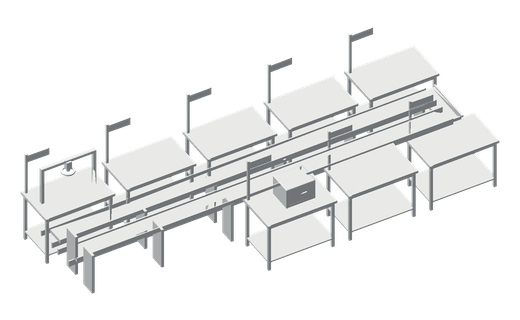
- Parts, each with its CAD
- 38 design target
- Assembly operations
- 22 design target
- Stations on the line
- 8 design target
- Tests before it's packed
- 15 design target
Want one with made-up data, worked end to end? See the EC-1 example.
04 · Trust
Every value says how we know it.
Nothing goes in without a source. Each value says if it was measured, inferred or simulated. When we infer, we say so and invite corrections.
- Size, across 30 units120 × 56 × 22 mmMeasured
- Landed cost per unit$12.97Inferred
- Rolled throughput yield92.2%Simulated
- Share of values measured or observed37%Computed
Values from EC-1, our made-up example controller.
How far a whole OPD has been checked
- ClaimedThe publisher's values, not yet checked
- CheckedCompared against a physical unit or the maker's own data
- TestedCompared against a real build
Less certainMore certain
Each OPD is private, embargoed to a date, or public. Before any release about someone's product goes public, the maker gets a private preview.
05 · What it's for
Start where the last maker finished.
Someone already solved it. Now everyone can build on it.
- Product teams
Fork a product
Start your variant from a product that already ships, with its line and its lessons.
- Factories
Quote the line
The stations, fixtures and tests are all in the file, so a contract manufacturer can price it.
- Operations
Simulate first
Run the line in software, find the bottleneck and test a fix before any tooling is cut.
- Quality
Learn from failures
Each yield hitter comes with its root cause and the fix, so the next team doesn't pay for it again.
- Researchers
Check it yourself
Every value links to its source, and every OPD says how to reproduce it.
- Agents
Hand it to an agent
Structured, sourced and machine readable. An agent can plan a build from it without guessing.
06 · Where it fits
Open Product is the N−1 of N+1 Labs.
An OPD writes down the last generation of a product and its line. The next one starts from what's known. How it fits with the rest of the lab
07 · First public release
OPD-0001, the Joy-Con.
A product many people have held. Rebuilt from retail units and public sources only. The maker gets a private preview before it goes public.